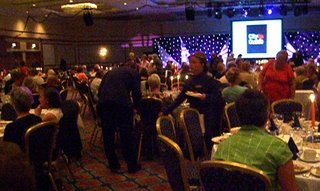
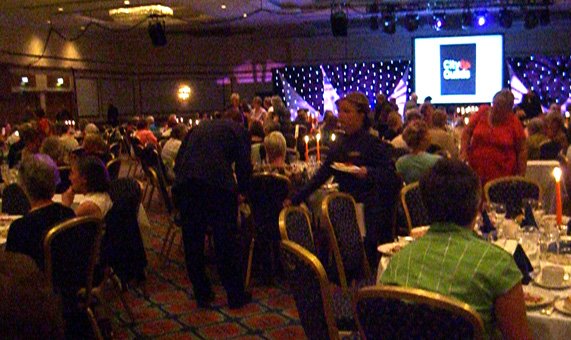
The Gala Dinner: 800 people in a room, the tables reflected amidst chandeliers on the mirrored ceiling -- and an oscar-style jazzy presentation of prizes.
But the after-dinner speaker was Michael James, and he said four things:
1. Learn to draw and use sketchbooks
2. Don't feed only at the quilt trough. Other arts offer a rich smorgasbord
3. something about working at the right scale, and giving the work room to breathe
4. Use your eyes.
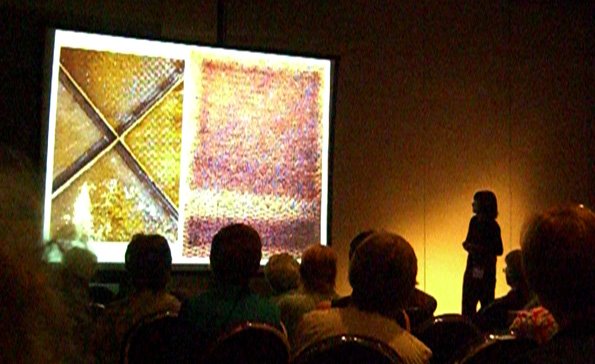
Among his slides was one of Mbuti bark cloth (my quilt was based on an Mbuti bark cloth!); he commented: If you're interested in line, look at these drawings on bark cloth from the Congo.
Michael James was one of the speakers at the symposium, Why Quilts?, that ran alongside the Festival of Quilts, in the mornings (people who attended the symposium said it was a real eye-opener). His lecture the next day was sold out, but others were interesting.
Diana Harrison spoke about her wholecloth quilts, her career, influences - and collections, which include squashed tin cans, disintegrating lost footballs, and old shoes she finds on her walks over Wandsworth Common. She started out spray painting with disperse dyes, masking and remasking the fabric, has moved on to splattering and flicking dye mixed with flour and water, which acts as a resist for the next layer, and now works in a different way, using a discharge paste she mixes fresh each time. She stitches backwards and forwards across the quilts to avoid having to darn in the thread ends. Her main inspiration is architecture but the titles of her pieces show a certain influence of life events.

Her show within the show had pieces of various sizes, in her characteristic muted colours.

Yoshiko Wada, author of Memory on Cloth, defined the process of shibori as manipulating a two-dimensional plane into three dimensions, compressing it and dyeing it - when you open it up, it reveals the pattern and the pattern is a record of the process. She showed slides of how various designers (
Issey Miyake,
Yoshiki Hishinuma, Yohji Yamamoto, Hiroko Koshino) had used this process in their collections, and of artists who used it.

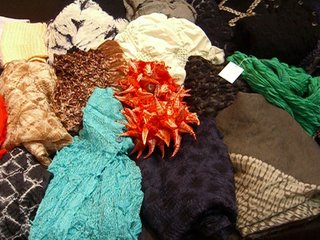
And she passed samples around; the next day they were heaped up in her booth.


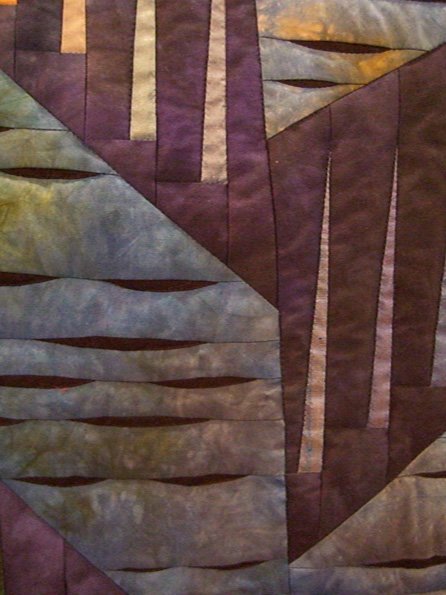 In the "quilts from Turkey" exhibit --
 but elsewhere they kept their threads behind bars.
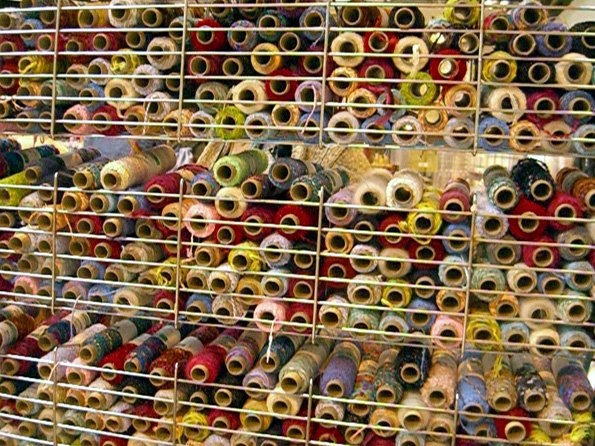 And now that I have lots of thread, something's gone wrong with the sewing machine.
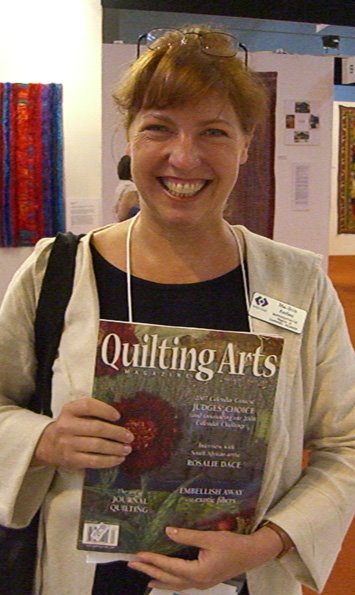 Bailey spotted the tripod, and the woman with the camera is Bonnie Lyn McCaffrey, over from the States and recording the show (she's the pioneer of quilting video podcasts). Bailey's latest book is "Inspiration Plus" - just out, it's not on Bailey's website yet.
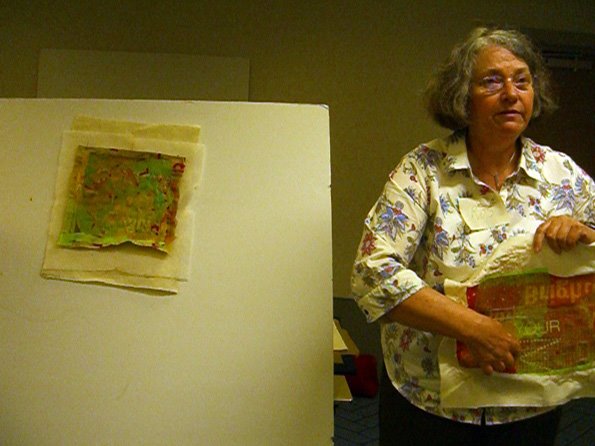
 Susan has been monoprinting over tiles, a technique from Sue Dove's workshop at the Contemporary Quilt summer school.
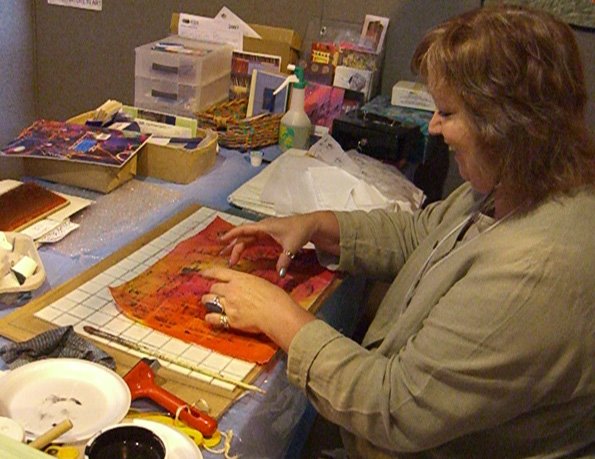 Sandy finished her C&G in fashion, and then won the student category. Her other work in the show included the Tudor gown she made during the course.
 But the after-dinner speaker was Michael James, and he said four things:
 Her show within the show had pieces of various sizes, in her characteristic muted colours.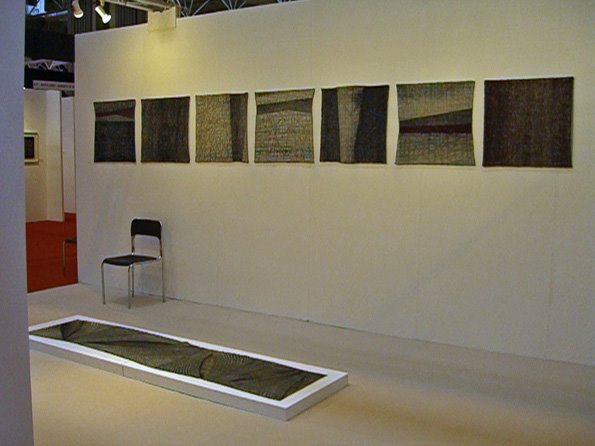
 And she passed samples around; the next day they were heaped up in her booth.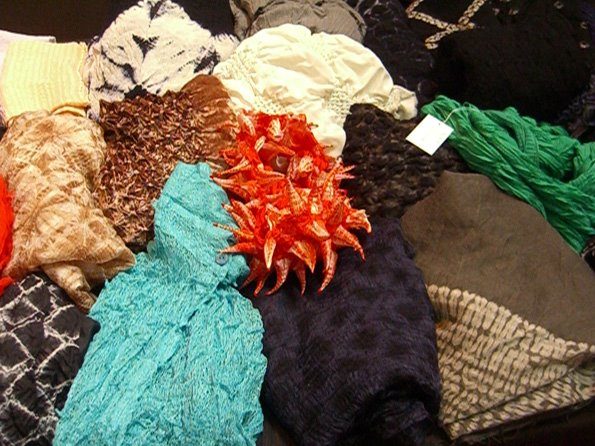
 And here we are in our windowless room, ready to go with lovely new Berninas, irons, and baking parchment.
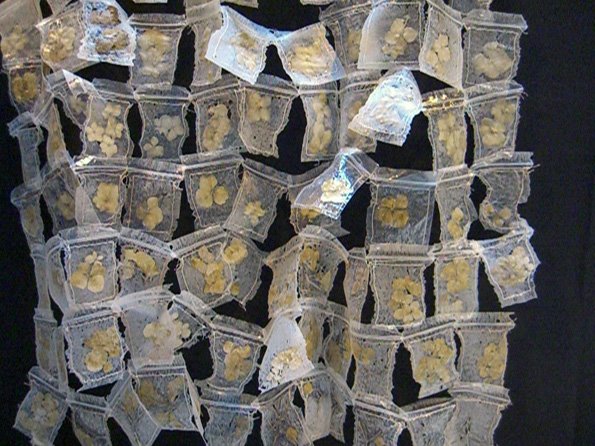
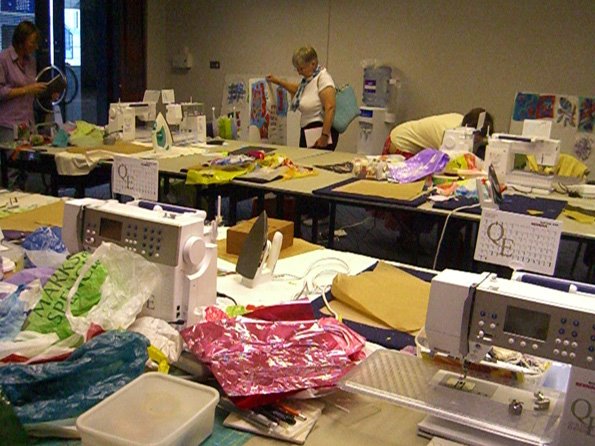 Our materials -- plastic bags!
 One of the big lessons of this workshop, for me, is the importance of light. At the end of the first morning, we had a look at what everyone had done -- out in the concourse, where natural light streamed in and the sunshine lit up the work -- what a difference!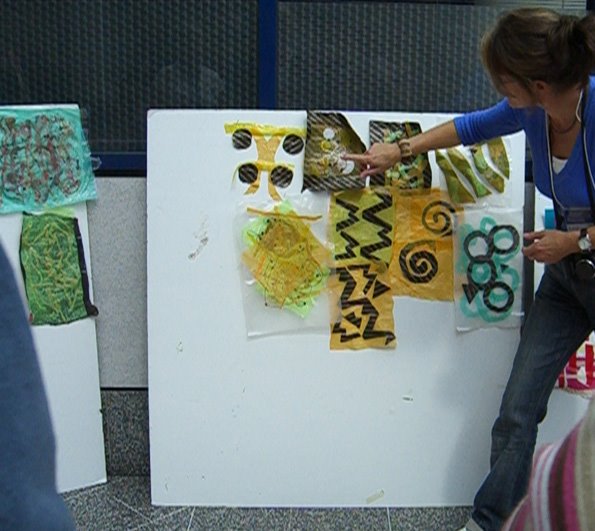
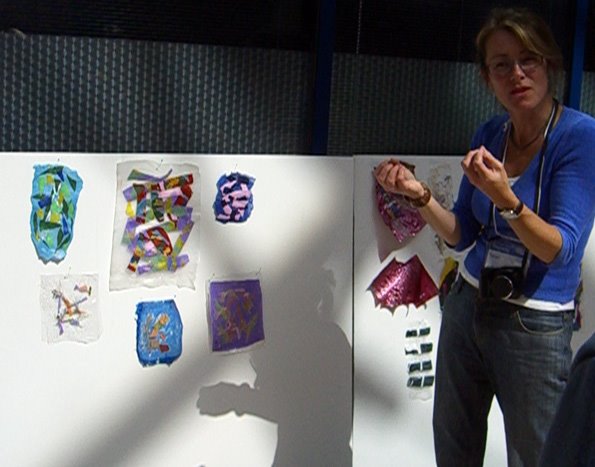
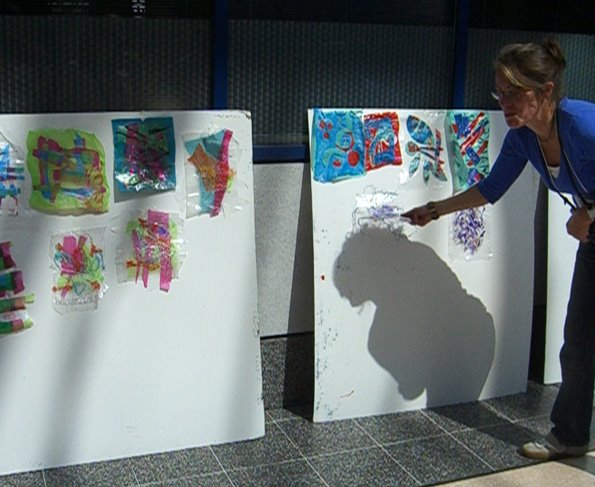
 Smaller sections can be juxtaposed
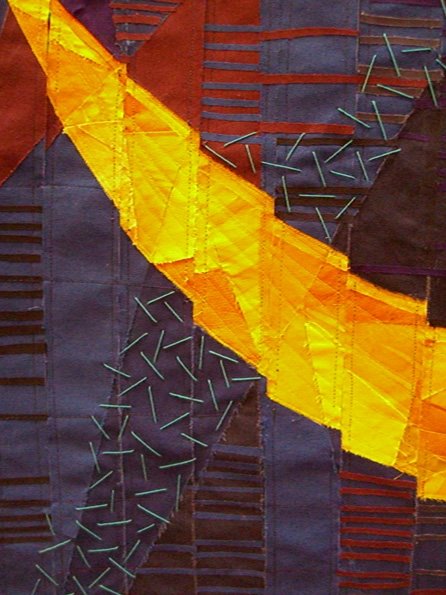
 Jo showed us various uses of fabric and machine stitch (invisible thread in the top) along with the plastic. I was entranced by plastic itself, but did come up with this "dress", with the thin silk (dyed at Hartpury!) coming up through holes in the plastic of the "hem" and held by a rather disturbing layer of pins.
 Here's a close-up of the interesting textures you can get. The plastic doesn't stick to the rug-canvas grid -- but it will stick to the iron if you have any that's not covered by baking parchment. Only a moment of ironing is needed -- and the plastic will go on shrinking and wrinkling unless you slap something flat and heavyish over it quickly.
 When I got home I made a cover for the compost heap, using what was on hand -- Waitrose bags. This is about a metre square.
 Here are the judges' toolkits
 and here are the judges, briefed and ready to
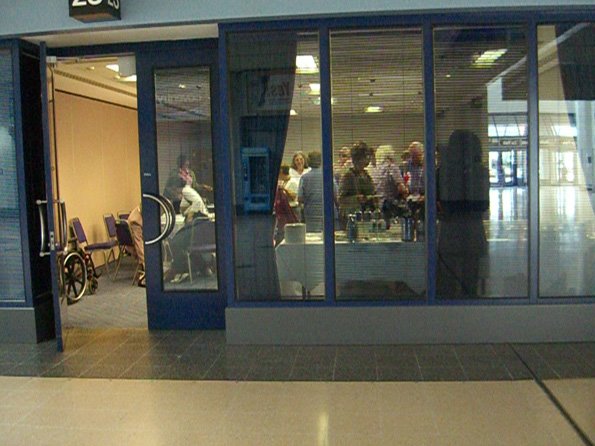 get on with a long day of judging -- apart from selecting winners in each category, they supply three sets of comments for every quilt (and there were more than a thousand this year).