06 December 2019

African textiles at Brunei Gallery till 14 Dec

From a collection of thousands of textiles, 150 have been chosen. This blog pos contains a lot of pictures, but certainly not all the pieces in the show. I hope it gives a flavour of the riches on display. Click on the photos to read the labels.

The exhibition examines the links between west and north African textile traditions through a selection of important and rare examples of textile art, shown for the first time.


 "The indigo room" -


 Wonderful hats -

 Fante flags -

 Woven figures -
Floating wefts


Further details on the Karun Collection can be found by visiting http://www.karuncollection.com; follow on Instagram @karuncollection. More of the African Textiles Collection can be seen in the book ‘African Textiles’ published by Prestel, 2015.

05 December 2019

Poetry Thursday - All Souls' Night by Frances Cornford

Seen on the Victoria Line
All Souls' Night

My love came back to me
Under the November tree
Shelterless and dim.
He put his hand upon my shoulder,
He did not think me strange or older,
Nor I, him.

Frances Cornford


Frances Cornford (1886-1960) is "perhaps known chiefly, and unfairly, for the sadly comic poem “To a Fat Lady Seen from a Train” (“O fat white woman whom nobody loves, / Why do you walk through the fields in gloves…”)."

A granddaughter of Charles Darwin, she was educated at home. Her first book of poems, which contained the “Fat Lady” verse, was published in 1910. Later volumes include Spring Morning (1915), Autumn Midnight (1923), Different Days (1928), Mountains and Molehills (1934), and Travelling Home (1948). Cornford’s Collected Poems appeared in 1954, and she was awarded the Queen’s Medal for Poetry in 1959. Many of her poems, often very short, express her deep love for Cambridge and its traditions. (via)

04 December 2019

Woodblock Wednesday

Week 2 of the advanced course included my talk on the Chinese woodblock printing course I attended in the summer, and most of the rest of the session touched the tip of the metaphorical iceberg that is bokashi.

The sun was shining brightly.
We tried the method recommended in Laura Boswell's book - use a paintbrush to apply a streak of colour, dab on some dots of nori, use a brush on an angle to mix in the nori, then hold the brush straight and make little circles to get the gradation.
Cobalt blue on a ground of Davy's grey

Further attempts at bokashi on a ground

That sunset-sky look ... or maybe not!
 Carol talked about Helen Frankenthaler's woodblock prints, some made in collaboration with master printer Kenneth Tyler and carver Yasuyuki Shibata, and some using dyed paper pulp, most of them fraught with technical difficulties
For example, Madam Butterfly (2000), which looks spontaneous but took three years, is over two metres long; it used 102 colours, printed from forty-six woodblocks, in a work spanning three panels of paper -
(via)
To work at this scale, she had a secret ingredient -
The wetting agent is mixed into the paint; it breaks up the surface and increases the spreading and penetrating properties of the liquid colour.
Dots of nori between dots of paint+wetting agent

Result!
Finally, a glimpse of one of my tool rolls full of tools. Actually it's now Val's tool roll, ready for action. I wonder what she put in the pocket....

01 December 2019

Ravages of time

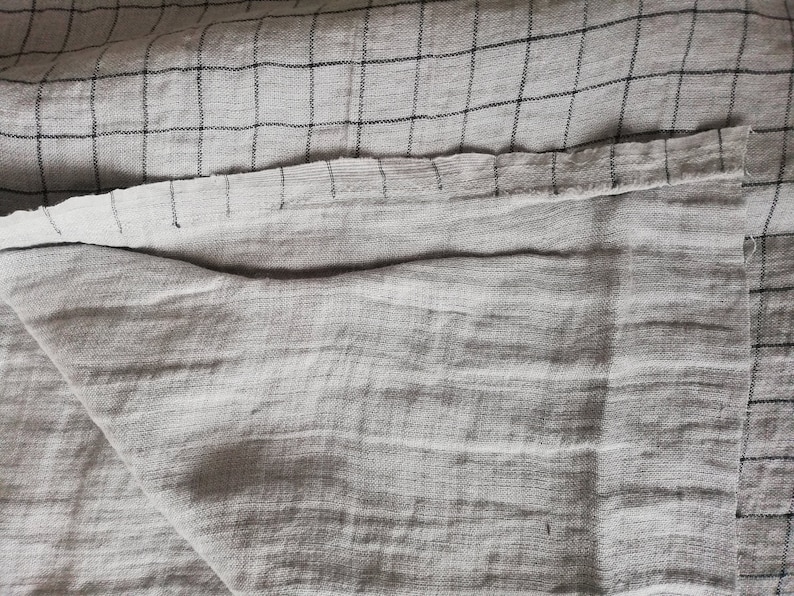
"Aha!" I thought, "Here's the leftover fabric from my favourite tablecloth ... looks like there's enough for making a set of placemats for a xmas prezzy?"

I like a tablecloth on my table - the wood is horrible, yellow-grey old oak with a few chips. (Photo not provided, can't bear it.) This is my current second favourite -
What you don't see is that it's made from a remnant that is adequately wide (across the stripes) for the table, but the remnant could have been maybe 20cm longer to make it adequately wide for the table.

Back to the cloth itself. Comparing the unused leftovers to the well-used tablecloth, I got a shock -
So grey, the tablecloth! Well, it would be - it's been in frequent use for about 10 years. Perhaps it's time for a new one.

The table isn't a standard size, in fact I got it because it's small (with extension leaves) and fits well into my not-huge "Great Room". So it's easier to buy fabric (110cm x 150cm minimum) than to pay more for a ready-hemmed cloth.

A Sunday-morning online search eventually found a source of Lithuanian linen and I'm trying to choose between the double-faced grey/white
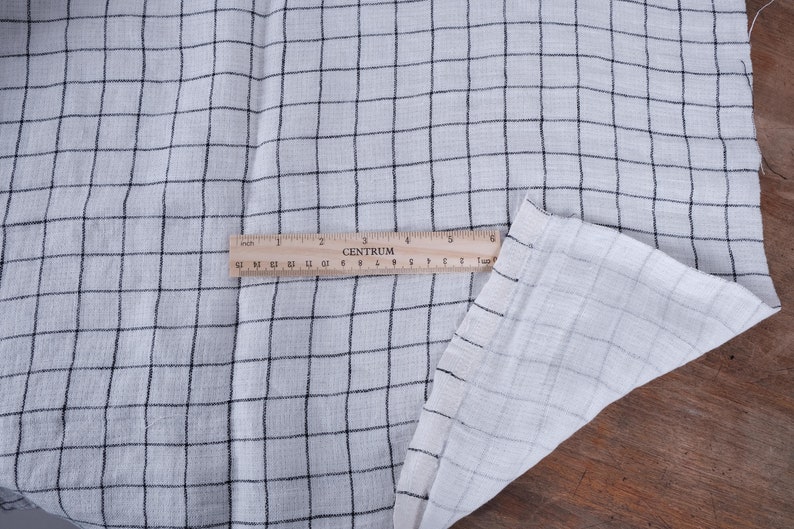
100% linen fabric DOUBLE face double-side fabric. White image 0
180cm wide, 240g/m2
and light grey/dark grey -
100% linen fabric DOUBLE face double-side fabric. Light grey image 0
145cm wide, 240g/m2
or one of these lighter-weight linens -
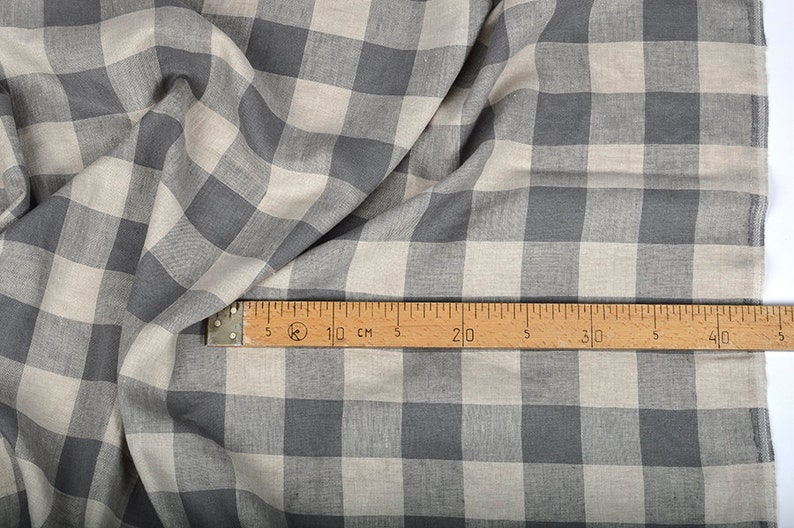
100% Linen fabric 200gsm medium weight dense fabric Checkered image 3
140 cm wide, 200g/m2
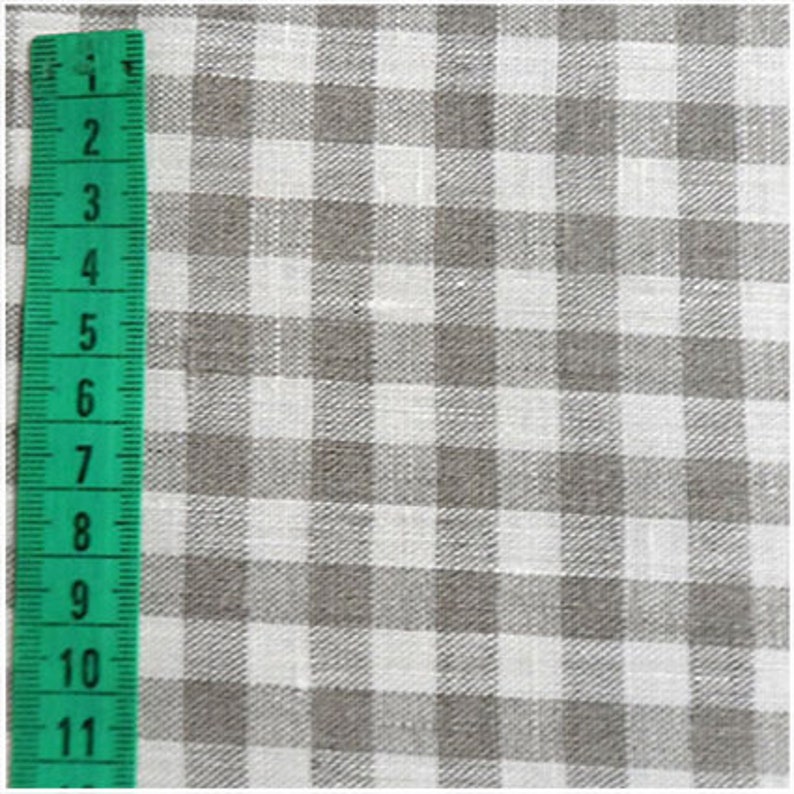
and then there's this smaller check -
100% Linen fabric 200gsm medium weight dense fabric Small image 5
140cm wide, 200g/m2

Dither, dither ... gotta plug this one into the unconscious and let it ferment for a while....