20 November 2008

Tetsuo Fujimoto in London

Until 17 December the Daiwa Foundation (near Baker St) is showing work by Tetsuo Fujimoto - he's one of my textile heros. I went to his talk last Friday and saw that a workstation was set up ready for the "meet the artist" day on Saturday afternoon, samples all in a heap -
After telling us about how he started as a weaver and in the mid-90s changed to "drawing with the sewing machine", we moved to the room with the sewing machine and got a short demonstration. At home he has an industrial machine with the stitch lengths programmed in - the beginning and end of each "stroke" are denser zigzag. Surface Design carried an article in the Fall 2005 "machine embroidery" issue. Fujimoto is quoted as saying: "I am trying to make the macro and micro world coexist in one picture surface, through the linear expression of the sewing machine. The overlapping of lines leads us from the surface to the inner world of that thing."
The large pieces take months of intense work, and Fujimoto doesn't do preliminary drawing - he focuses on the idea the whole time he's stitching, unlike with weaving, where he could let his mind wander. The current exhibition shows many small pieces, a chance for play and variation.
His base fabric is hemp, because that is a local material. He uses polyester and rayon thread, but says "silk is the best" because of the way the colours interact. The layers and varying density cause the fabric to ripple, emphasising the textile qualities of these big pieces. The blue piece on the final page of the article is in the exhibition - it measures 81" x 79", draws you in from a distance, then envelopes you as you focus on the details. Macro and micro, as he says.
Most of the other pieces in the exhibition are white stitching on dark backgrounds - sometimes with delightfully vari-coloured bands of satin stitch along the bottom.

This page has photos, including the bands of satin stitch and the demonstration he gave us (I'm in the picture!)

19 November 2008

Finsbury Park again

Lovely day for a walk through the park - to the post office in search of a passport that should have been delivered yesterday and seems to have disappeared.
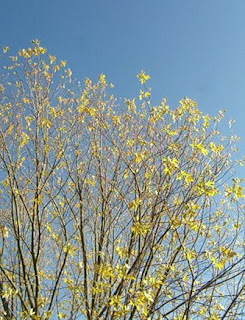
A clear blue sky, and sun shining through the leaves -especially the birches -
Why are the last leaves left the ones at the tip of the branches? Is it a matter of last out, last on?Irresistible to sit in the sun and watch the women and children, men and dogs pass by.
But that was definitely the most insipid cappuccino in all of London.

More studio rejigging

Step 1 in the reorganisation of my "weekend studio" was clearing out the hidden corner where the fabric was piled onto and sliding off of an old cabinet.
Step 2 was a trip to ikea to get some shelves - and some useful boxes. Of course everything needed assembling.
Straight ahead as you come through the door are some mid-height, back-to-back bookshelves that act as a room divider and work surface (and my threads are lined up on top). On the sewing side, the shelves have been rather cluttered -so the heaps are going into the new boxes. They aren't ideal but they're tidier - and at 49p each, a cheap interim solution. Obviously they'll need labels - silks&shinystuff; wool&velvet; scraps; ufos....Here are the new shelves, complete with a light that used to be in the "living" side of the room -
Love those pull-out boxes for storing the really untidy stuff.

Shopocalypse

Christmas is coming, the annual consumerfest madness, the fruitless quest for the perfect experience with family and friends who can be ignored the rest of the year. Yes, I’m a bit cynical about Christmas – so it’s good to hear about Reverend Billy and his Church of Stop Shopping, a travelling band of comic choirists spreading a message of socioeconomic sustainability in a mock-religious package. “Christmas is being hijacked by the marketing tsunami,” says Rev. Billy.

This project has expanded from a one-man performance artist preaching against consumerism on the sidewalks of Times Square, New York, to a 35-person choir and 7-person band with dozens of original songs and multiple media platforms. It’s educating the public about the consequences of unsustainable consumption. “The message -- consuming less-- is the single most effective and immediate response an individual can take to immediately halting the climate crisis. This same message has reached millions of people and has contributed to the public's increasing awareness of the relationship between shopping and climate change.”

I’m a big fan of making cards and presents, and love to receive handmade things (and find them impossible to ever discard). When we were kids in a cash-strapped family, we made presents for aunties, teachers, friends - frantically, right up to the last minute. We loved doing it. Now, so many people are pressed for time, giving time is the ultimate luxury.Along with the proliferation of "crafty" websites full of inspiration and instructions for thousands of projects, the internet in its wisdom has come up with "the handmade pledge" - at time of writing, 30,526 people have signed up!

Here's something handmade - the "steady hand tester" made by Thomas, age 12. If wire touches wire, the light goes on...

16 November 2008

Toronto


When you say you're from Canada, people always ask if you're from Toronto (they usually have a relative there). I'm not from Toronto, and for the record, the only time I was ever there was at 11pm on a wet June evening, travelling by train from Halifax to Vancouver with my just-6 year old son, on the way back to England, via a visit to my parents, after living in Halifax for three years. The train stopped for an hour. I (bad mother!) left Thomas asleep in our roomette and had a spinach salad in the station restaurant, then a quick walk just outside, looking at the reflections of tall glass buildings on tall glass buildings against the heavy, dark sky. When I got back to the train Thomas was still asleep. He missed Toronto altogether, and doesn't seem to have suffered from the experience. (Next stop was Winnipeg, where we had time for a delicious Sunday brunch.)

Of course I didn't have my little digital camera with me to take lots of photos on that trip - it was 1982 - the image above is from google's cache. The image below is from this site  and shows the Royal York Hotel, one of the grand old railway hotels - but not the iconic CN Tower, which was once the world's tallest building (553.33m).  I'd like to go to the museums in Toronto - especially ROM (the Royal Ontario Museum), which in addition to "world culture" galleries has a collection of 50,000 textile and costume pieces, of which about 200 are on show at any time. One of its publications, Cut My Cote, has been on my bookshelves since about 1980. It's by Canadian textile expert Dorothy K Burnham and deals with the relation of the cut of garments to the width of cloth in traditional cultures. Dorothy worked at ROM from 1929 to 1977. Toronto's newspaper, the Globe and Mail, had a good obituary of her (11 November 2004) but it's not available online [why?], nor - like so many textile people - does she have an entry in Wikipedia [why?].

15 November 2008

How many pairs of scissors?

Where are the scissors when you want them? I've rounded up all mine:Good advice from Jennifer James, a radio psychologist broadcasting out of Seattle some years ago. She said you KNOW you're going to need 75 pairs of scissors in your lifetime, so why not just go out now and buy them all, and then you never need to stand in the kitchen yelling to your family, "who took the kitchen scissors?!"

14 November 2008

Transition - three more

These 12" square JQs are silk, bonded on, then closely quilted - first, "Sorting" -then "Off Kilter" -
And "In a Spin" - which uses teeny tiny scraps, already with bondaweb, left over from cutting circles (just couldn't bear to throw them out; knew they'd be useful sometime...) -

Scrap happy

While rearranging my big cupboard, I found a boxful of silk samples, glued to cards. They took some careful getting off. When this street had a number of small garment factories, 20 or so years ago, you'd sometimes get treasure like this in the bags of offcuts they put out on the street for the garbage collection in the evening -- just when I was passing by on the way home from work. Mostly it was polyester rubbish, but sometimes there would be "potentially useful" things. I've had these for all that time, and now they'll finally be used in JQs.

11 November 2008

Painted pages

Those dye-painted pages lured me into sitting down and studying the freesias. The way the petals fit together in the bud is intriguing, and you'd never notice unless you were "looking through drawing".A pigeon sat outside the window and let me have a really good look at him (?her), with lots of suspicious head-turning. What vacant eyes full of evil intent these birds have. The ruff of feathers behind the neck is interesting, too.

Having the painted pages makes it easy to get started and keep going. My aim is to fill the page, and to see something new.

10 November 2008

Studio as dumping ground

When people talk about their workspace, they often mention that it becomes a dumping ground not only for unfinished projects, but for things on their way to another room or things that have no special place to "live".

The corner of my workbench is just round the corner from the living room, so anything that's lying around in "the tidy room" is likely to get dumped in "the messy room" -- Not a pretty sight - and having slalomed past the bags of things waiting to go to the charity shop on one side, and the wedged-half-shut door and overflowing scrapbag on the other, would you feel you could produce anything serene here, even without seeing the strata of unfinished projects on the bed, and the fabric spilling out from under it?

All that stuff lying around can make a person feel overwhelmed - it all cries out "use ME first!" If you're wanting to start something new, it doesn't let you think ... if you've got deadlines, it doesn't let you work on just one thing at a time. It drains you. It needs to be out of sight.

In my heart of hearts I know the "answer" isn't to have a bigger room or more cupboards, but to have less STUFF. But how many of us find it a struggle to let go of that stuff - the fabric, the art supplies, the old magazines? "That might be useful one day" and "oh that's too good to throw away" or even "if only I could find someone to give it to, who'd make good use of it" -- !

Beyond the workbench there is a cupboard that rarely gets opened. This seems to indicate that the things in it aren't being used. Looking at them through the dispassionate eye of the camera indicates that a consideration of what belongs where is overdue.It's been instructive to take these photos and look at them, rather than at the reality they depict. I can see a way forward, and even estimate how long it will take to sort things, rather than feeling overwhelmed by impossibility.

Rocky ramble

Rocks have been used as the starting point for quilts - for instance in Connie Scheele's "river rocks" series (halfway down this page) and of Elizabeth Brimelow's recent "shingle" series (see some here). The Contemporary Art Quilt show at Uffington in 2003 had stones actually in the quilt - ah I've found the catalogue of the show. "Depressions - Winter 2003" is by Becky Knight and incorporates 2000 stones, painkilling tablets, and builders scree - it weighs 17kg.Using pebbles in a quilt might be a way to justify keeping them? I can't resist picking up a beautiful pebble here and there, and now all my plant pots are topped, indeed overflowing.

A favourite type is "hag stones", flint with holes worn right through; you find them on the shingle beaches of the south coast. One old story (which I have been unable to find on the internet) is that if you have an enemy and look at them through the hole in the hag stone, you can put an evil curse on them. It does look scary, especially because this stone has one hole that goes all the way through and another that goes halfway -but I was thinking kind thoughts while looking into the camera, so be assured that no harm will come from this.

And while we're on this rocky topic, these stones are part of Abbey Cwmhir in mid-Wales -The abbey was started in the 12th century and the church would have been as large as York Minster - even though it was in what then must have been the middle of nowhere. But the transept and choir were never built, just the nave. Like all monastic institutions, it was dissolved by Henry VIII in 1536-7 and has been crumbling away ever since - here's what's left -Five of the arches were quickly taken away to Llandiloes, where they are now part of the church. Apparently the angels above them date to 1542.One final stone - this headstone in Llandiloes churchyard commemorates Sarah Jarman, who died in 1859 aged 105 -

09 November 2008

A week ago

More than a week ago - how time flies! On 31 October I became "semi-retired" - no longer a salaried employee, I will be working freelance two days a week - inverting the work week, as it were, to get a very long "weekend".

As I wasn't actually leaving completely and forever just yet, my colleagues had a non-leaving event, to my surprise (and delight) presenting me with some very special items:

"this is not a leaving card" looks like an issue of BMJ but instead of dense, printed medical articles and advertisements it contains crowded pages of kind and thoughtful handwritten messages from the current cross-section of dedicated, bright, serious&fun people I've been working with for the past 21 years, 11 months, and 8 days.

The photo is a close-up (very close up!) of one of the pieces from the River exhibition, now owned by a perspicacious colleague who snapped it up at the show's preview.

The straplines on the "cover" say:
We say adieu to Margaret Cooter after 21 years
Wot wil we doo withouut her eagle eyes?
Good luck with all your creative projects
SEE YOU TWO DAYS A WEEK
(to compare this to a real BMJ cover, click here)

The other very special item is a leather-bound copy of a little book called "Poems in the Loo". In her introduction, BMJ editor Fi Godlee explains how it came about:

"Like Poems on the Underground, this book is the result of a subversive and generous idea. Earlier this year, a piece of A4 [paper] appeared, sellotaped to the inside doors of the two cubicles in the ladies loos in the BMJ's editorial office. It urged us, in a bossy and inelegant two line doggerel, to check that the loo had flushed properly after we'd finished. Most of us probably raised an eyebrow, shrugged, and then thought nothing further of it. But for one person this was something that could not go unanswered.

"On subsequent visits to the loo, we began to see other pieces of A4 sellotaped over the original one, and rather than always choosing the loo next to the window, I began trying out the other cubicle in the hope that a new poem had been posted there. In the weeks that followed the poems became a subject of conversation and speculation within the BMJ editorial team. It didn't take too long to work out who we had to thank. It was clearly a woman - the men weren't getting the same service in their loo next door. It was someone with a sense of humour and community spirit. It was someone who preferred to make her point quietly, preferably anonymously."

And they decided to compile them into this beautifully laid out booklet, in a limited edition (so that everyone could have a copy and the men could read the poems too). Some of these poems are among my favourites; some are new to me but chosen because they fit on a piece of A4 [letter-sized] paper in a type size I could read at that distance.

Thus do small events have larger results....

And what a relief not to have to proofread the BMJ cover each week!

08 November 2008

Tis the season

... to enjoy the leaf colours (and learn the names of trees - sorbus, prunus, acer ...) --And to wear red shoes.

The little crazy things we do

When the to-do list gets as long as your arm, do you find yourself doing the non-essentials, the things not on the list?

Some dye solution had been sitting around for a long time, so I used it to paint some sketchbook pages:Then I added "paint sketchbook pages with old dye solution" to the end of the to-do list, and crossed it off. Very satisfying!

06 November 2008

Postcard from Korea

What a great fundraising idea. Frances Holliday Alford was visiting Korea, where she has connections with the Cheongju School for the Blind, and offered to make and send an art postcard to anyone on the Quiltart list who would send her $30, to be passed on to the school.
It must have been fun gathering bits of this'n'that to collage. For the recipient, it makes the world more connected. Just a drop in the bucket, but lots of small individual efforts make a difference.

02 November 2008

The colours of London weather

An early autumn afternoon on Waterloo bridge, looking upstream -

and downstream -

Now the arty, weathery blast from the past. A famous view by Monet, one of a series he painted from his hotel room, just to the left of those trees beside the boats -

"Where, if not from the Impressionists, do we get those wonderful brown fogs that come creeping down our streets, blurring the gas-lamps and changing the houses into monstrous shadows? To whom, if not to them and their master, do we owe the lovely silver mists that brood over our river, and turn to faint forms of fading grace curved bridge and swaying barge? The extraordinary change that has taken place in the climate of London during the last ten years is entirely due to this particular school of Art…at present people see fogs, not becuase there are fogs, but because poets and painters havae taught them the mysterious loveliness of such effects. There may have been fog for centuries in London, I dare say there were. But no one saaw them, and so we do not know anything about them. They did not exist until Art invented them." - Oscar Wilde, “The Decay of Living” 1889

This is the classic image of London fog -

all rather "pretty" these days, but a serious problem until the Clean Air Act of 1956 banned coal fires and ended those pea-souper smogs.

Murk came in several types, says Peter Ackroyd in his book "London: A Biography" - a black species described as "simply darkness complete at midday"; bottle green; as yellow as pea soup; and "a rich lurid brown". He didn't mention "fuchsine", as in this view by Monet:

Fuchsine was a synthetic dye used between 1875 and 1925 - it wasn't very lightfast.

01 November 2008

Oops!

Here's what happens when you don't proofread carefully. Somehow (and I know exactly how!) the date of next year's Spring Regional Day came out as 21 March 2008. We've ordered 5000 of these fliers, so very now and then I get out the tippex and the pen and put on some music and fix a few hundred dozen more.

If you're in London on 21 March 2009, do come along to hear speakers on Indonesian batik and Mongolian quilts, and join in with all those other quilterly things that go on at such get-togethers -- show and tell, chat, tombola, traders, chatting, raffle, challenge, refreshments, more chat - a jolly time.

Details are on the Region 1 website.

My trees and their trees

The chestnut out back, in the morning light, was having a Paul Nash moment -It reminds me of Nash's "Wood on the Downs" somehow -Another Nash painting is "Storm Trees" -Unrelated to Nash, more Henri Rousseau perhaps, I've watched the leaves fall off this tree - intrigued by the negative spiky spaces -
Here's Rousseau's "Storm with Tiger" (which is in the National Gallery, just down the road) -We had it as a jigsaw puzzle, a few years back. Jigsaw puzzles are a "different" way of looking closely at art!