The latest issue of Art Quarterly (winter 2017) has an article about upcoming textile exhibitions round the UK.
Norwegian weaver
Hannah Ryggen is at
Modern Art Oxford till Feb 18. Living in a village, she was self taught: "
Weaving belonged to a tradition which came from the culture of farms" (
via). Her 1930s works are very political; she's speaking out about her experience: "the works have a very immediate message, but they're done with this incredibly slow, careful medium [tapestry]."
 |
| Hannah Ryggen: jul Kvale, 1956 (via) |
(This art-magazine
review of the Entangled exhibition, also by Hettie Judah, puts the show into more than one context:
"[Christine] Löhr’s [fragile structures] occupy a sphere of making that ‘Entangled’ embraces quite unequivocally: craft is presented here – as per Bauhaus philosophy – on equal footing with art: specifically those practices that are awake to the possibilities of hand production (and which, of late, have drawn heartily on craft traditions including tapestry, embroidery and ceramics). This, today, is a more politically audacious move than the decision to dedicate the show entirely to female artists. But, given that it opened a week after women all over the world took up their needles and knitted pink pussy hats as an act of protest, you can’t fault the timing.")
Anni Albers ("long overshadowed by her husband Josef") gets a mention in the article, partly as a segue, via the Bauhaus, to the work of Harriet Wallace-Jones and Emma Sewell - they collaborate as
Wallace Sewell, "painting with yarns" and designing fabrics, and have a show at the Fashion & Textile Museum, London, to 21 January. If you've travelled on the Bakerloo Line recently, you'll have sat on their moquette, showing the London Eye and Big Ben.
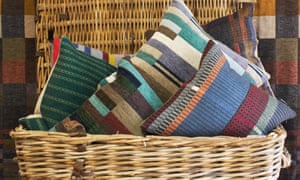 |
| Wallace Sewell's designs are woven in Lancashire (via) |
Dovecot Gallery, Edinburgh, is showing "
Daughters of Penelope" till 20 January, celebrates the work of artists and makers working with the gallery. Dovecot Studios wove Paolozzi's The Whitworth Tapestry (1967; part of the Paolozzi exhibition at the Whitechapel Gallery earlier this year) and Chris Ofili's The Caged Bird's Song (2017), recently
shown at the National Gallery.
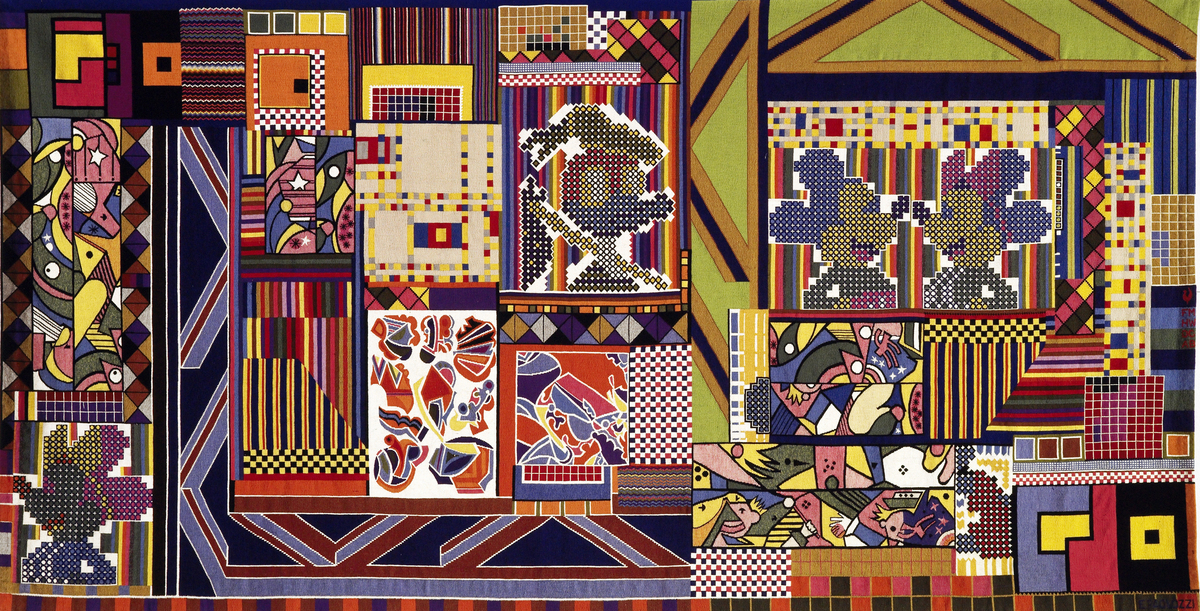 |
| The Whitworth Tapestry, by Eduardo Paolozzi (via) |
 |
| "The quality of human time is embedded in tapestry" (via) |
The Edinburgh show includes Finnish weaver
Aino Kajaniemi "whose tapestries appear loose and even fragile through the use of yarns as fine as fishing line alongside bulkier linen textures. Many of these portray women and children in rural and domestic settings" - and also American artist
Erin M Riley, who uses tapestry "to explore charged issues in the fast-moving online world." Both artists also featured in
Tapestry: Here & Now at the Holborne Museum, Bath, which unfortunately has been and gone.
"
Alice Kettle: Threads" is at the Winchester Discovery Centre till 14 January, and she is collaborating with groups of refugees, till autumn 2018, on the "Thread Bearing Witness" project, which will be exhibited at the Whitworth, Manchester, from Sept 2018 till February 2019.
 |
"Sea" is 8 metres wide and was designed in response to harrowing
stories of migration across the Mediterranean ( via) |
So far the focus of the Art Quarterly article has been on weaving (is that the form of textile that most nearly approaches art?) ... but now we come to embroidery, in the form of May Morris, daughter of William, who put her in charge of Morris & Co embroidery department in 1885 when she was just 23. "She was recognised as a leader in the field of embroidery during her lifetime" - but her reputation has been neglected because "the fragility of the embroidery itself has played a role in keeping May's work out of permanent museum displays." See her work at the
William Morris Gallery, Walthamstow, till 28 January. (Interestingly, this exhibition needed crowdfunding to make it happen.)
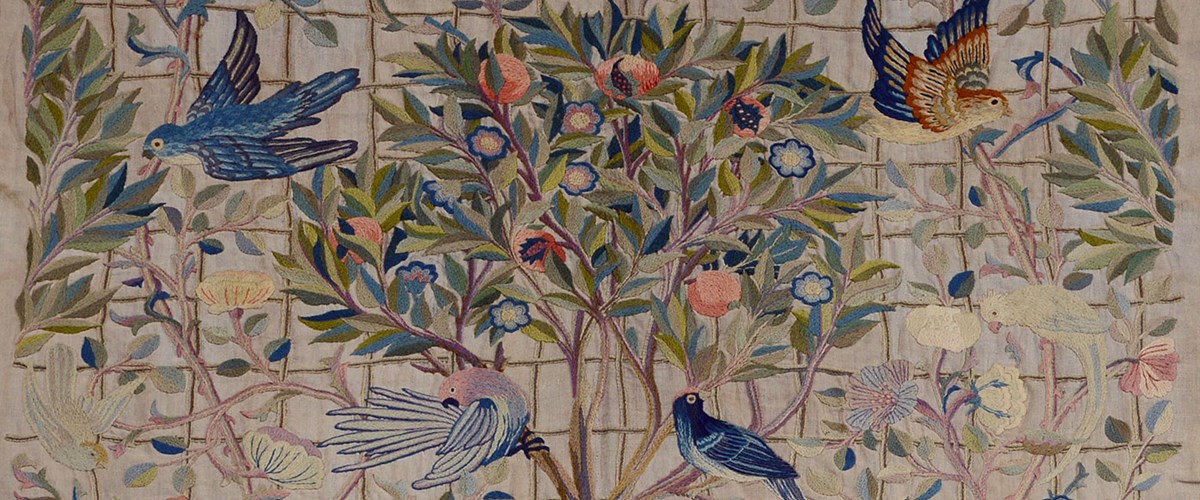 |
| Worked by May Morris around 1900, displayed in Edinburgh (via) |
Watch out, also, for Tate Modern's
exhibition of Anni Albers' work, 11 October 2018 to 27 January 2019. Her choice of textile as a medium "was forced somewhat by the Bauhaus school's bar on women studying in departments such as painting and glass." As she later observed, "when a work was on paper it was considered art, but when it was made with threads, it was considered craft." (Plus ca change?)
 |
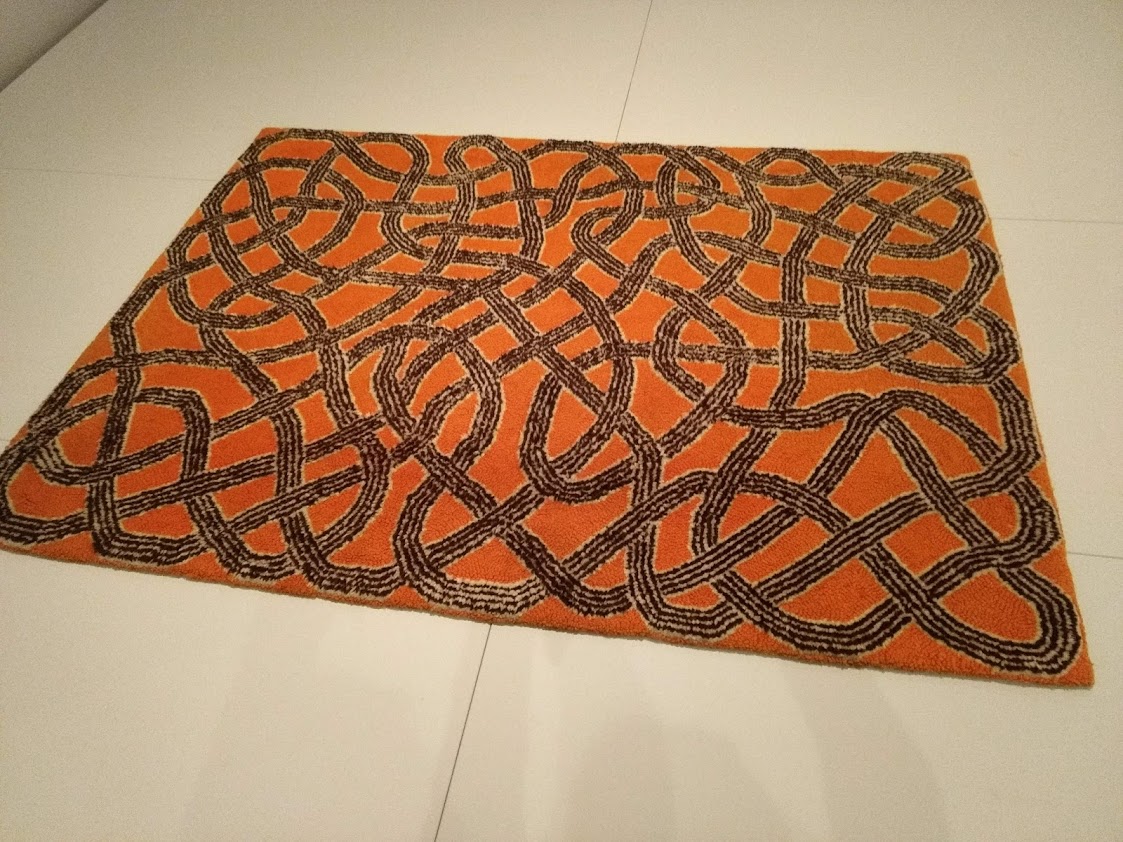
| Design for a rug, 1927, by Anni Albers (via) |
Finally, are textiles coming closer to finding a place in the art world? As Hettie Judah says in the Art Quarterly article, "Within the art world there has been a marked resurgence of interest in the idea of an artist as a direct maker of objects. A central theme of this year's Venice Biennale [was] the relevance of textiles and hand-making in a digital age."
But it seems to me that handmade=craft, in the eyes of the status-conscious art world, and that the "making" parts of art are less prestigious, eg carried out by artists' assistants and technicians. I think we shouldn't let ourselves be sucked into this bit of territorial defensiveness (or in-fighting), but just get on with doing what we need to do in terms of our "art making" - and being thoughtful and/or clear-sighted and/or open-minded about it all.