10 March 2018

Another session of woodblock printing

During the week I'd cut another, reversed, set of "flying bits" and was eager to print them -
Uh-oh ... reversed didn't quite work - the idea was that they should mirror the diagonal direction, ie from top left to bottom right. Ok, this makes an "opportunity" to try something else. The orange ("vermillion") was disappointingly pale anyway...

A tiny bit of blue mixed into the orange, to tie it in with the other colours; some selective inking up; and a bit of careful registration -
Some unwanted areas of the cutaway background have appeared. Too much pressure with the baren? Sloppy application of the "ink" (watercolour, actually) is a more likely cause. Must try harder!

As for these ...
Definitely too much pressure, combined with uneven inking and hot, dry conditions in the room. Again, an opportunity to "take it farther" in unexpected ways - nothing to lose, is there?

But how to get a better result? Carol showed me how, with a big area to cover, to use the side of the brush to apply more ink at one time, and that the grain of the baren should be used along the grain of the wood. A much better result -
The "monsters" that I overprinted were too pale -
 Carol suggested "turn it over and print them again" -
Registration could be better, but the layering works.

09 March 2018

Fun with flows

The first glimpse of pipes in the Hydrodynamics Laboratory at Imperial College had me reaching for the camera (and I would happily have spent hours with a sketchbook and the pipes). But more and better was to come.
The paddles are sequenced to set up various kinds of waves

Waves can travel quite some distance in this tank

Computers are a very important part of the equipment
- the calculations are extremely complex

Students were on hand to explain things I'd never even thought about

A nod to health&safety

Nice crisp combinations of colours - and the contrasting
subtlety of the water

The effect of water on coasts can be simulated and modelled

Tracers simulate the flows caused by adding pollutants
The Inaugural Lecture that we came to hear - Fun with Flows: the fluid science of healthy environments, given by Graham Hughes, was anything but dull: both the speaker and the graphics were great. And afterward: wine and canapes!

08 March 2018

Poetry Thursday - revisiting the younger self

Back in the mid-90s, my early days of taking textiles courses (at City Lit) - mainly in "creative embroidery", I filled many sketchbooks with notes on classes and my own ideas. Sometimes the notes spilled beyond the books - and sometimes the topics we dealt with were "uncomfortable"; eg, action drawing of the figure. One term we had a session with a life model and, new to this, I did what I could and was very aware of my limitations.

How to take it further? In the next session the course tutor (Julia Caprara) presented various strategies to the class, including "going round the room" and commenting on each others' work. Those comments are written as the green notes, and they include plangent phrases, which I used to make a "word picture" of what was going on with my figure. After that, I made some versions in cloth, which - such was my feeling that this was definitely a dead end - I had no problem throwing out.

However, it's often the troubling creative experiences that have stay in the mind and have the greatest impact on further work; so, because of the dissatisfaction with this, I've gone on to try hard with further life drawing, portrait classes, etc. Something surprising usually happens, and what more can you ask?

Now to the "poetry" aspect. At first I thought the figure was running, but through the feedback and the composition of the "word picture" I came to realise what might be going on -

walking through water
small cold stones pressing underfoot
but toes and heels are too numb to notice
knees cutting through air;
the body follows
fists punching forward from shoulders
momentum through thin air
pulling the body forward
forward through thick water
through water thick as blood
but colder
then out of water
and running
             running
forward through the night

And from 1987, this bit of tomfoolery (a song lyric?) -
Your feet have fallen off
And you're yellow
Your spine is curved
Wa-oo-wo
You're a banana now

Also found in that notebook - notes on books used in writing my chapter in
"Reviewing the Reviews: A Woman's Place on the Book Page";
some costings for a trip to Vancouver via an EASE conference (and
visit to friend) in Ottawa; an unsent letter to a friend, with
reminders of everyday life in 1987/8

07 March 2018

Trying to do one thing at a time.

Ready for attention
The cold weather caused some problems with the boiler, which meant that the cupboard needed clearing to get proper access.

While my son was removing bags and boxes he would - in hope of being "helpful" - say things like "you haven't looked at this bagful of old envelopes since it went into the cupboard ten years ago, you obviously don't need it, just chuck the whole thing out without even looking at it."

Which is true at one level, but it's not the big picture. These shambolic items are my "creative resources"!

Now the shambolic bagfuls of this'n'that are all over the floor of the studio. But this isn't a chaotic disaster, oh no - it's An Opportunity. What if ... what if the things that went back into the cupboard were only the things that I might actually use in my lifetime? And, what if someone else could find what they were looking for?

Which raises the big questions - what creative projects do I want to continue with? Can the other materials find new homes and have a chance to be "useful" to someone else?

While these swirl around in my subconscious, the glimmerings of a strategy are emerging. To find the way forward, look backward ... where are all the things I've already made, the quilts and the pots and the books and the things that have been forgotten but still linger physically? These need to surface and be seen, to be evaluated and sorted, and the survivors wrapped and labelled and kept carefully.

What you glimpsed in the photo is a selection of quilts from the past 20 years - some are already in bags, and the plan is to spend a couple of hours making bags for the others. (A tutorial is on my website.)

With those safely (and nicely) out of the way, phase 2 is to search out ALL the ceramics and put them in one place - "Japanese tidying".

There is surely a sensible sequence for this.

I look forward to being able to swing a cat in the studio!

06 March 2018

Drawing Tuesday - Museum of Childhood

The board games section was well lit, and there was a handy seat. I settled down in the corner....

"Home made board game 1959. The Cass family
 invented and made their own family board games
between 1930 and 1980."
 ... ignored the children ...
Schoolkids delighted to have a play in the sandbox
... and got absorbed in the shapes of these letters -

 They took close looking and some experimentation, and still don't seem right!
 Sue polished off some glove puppets by Mary Bligh Bland, 1980s -
 ... and went on to an automated doll from the 1890s -
 Janet K made inroads on the dolls houses donated by Rachel Whiteread -
 Carol rearranged items from one shelf of a display -
We marvelled at the range of skill - or of shapes of tiles -

applied to making the mosaic floor. This was a job given to female prisoners in the 1870s. The entire floor - 6000 squares! - is made of two patterns within the square -
Can you spot where a lapse of attention got it wrong during the laying of the floor? And would you be able to find that place on the actual floor?


05 March 2018

Trip planning

At Stanfords map store, the books on the Camino de Santiago are on the top shelf -
My sister and I are going to start walking at Burgos and I'll go as far as Leon, whereas she - an experienced and focussed walker - will carry on to Santiago. That leaves about a week back in England before she returns to Vancouver, and the plan is to do some more walking.

John Brierley's guide to the Camino Frances (the route marked by yellow dots) has been updated every year, as new hotels etc spring up. I've been loaned an older version, but it makes sense to take the most recent edition along. Interestingly, the distances on the "chunks" - sections that it's practical to do in a day - have been revised slightly. 
Comparison of the 2018 and 2013 editions shows some changes in the town maps  - this is Burgos, our starting point (we'll have a day for sightseeing) - new edition is on the left -
and below is my endpoint, Leon, where I'll hang around for a day or two before taking the train, stopping off somewhere or other (to be decided) for a bit more sightseeing on the way home -
The re-orientation of the map, without change in the compass, is confusing - but does make room to show the locations of the new hotels.

Now that we have our tickets to Spain and have booked the first few places to stay, the whole project doesn't seem quite so daunting ... but it won't be long before I find something else to worry about! 

The main thing is that it'll be great to spend time with my sister - we haven't seen each other for nearly seven years - lots to catch up on...

04 March 2018

Living with gods


The Living with gods: peoples, places and worlds beyond exhibition is at the British Museum until 8 April - I found some wonderful objects there, filled a page of my little notebook with visual reminders -

and couldn't resist taking a photo of the setup of the exhibition - swathes of translucent fabric marking off the sections. As you tried the look through, the shapes beyond were simplified and made mysterious. It seems to be a metaphor for the subject matter of the show.

The podcasts of the 30 programmes, made by Neil Macgregor, about some of the objects, broadcast last year, are available here or via various podcast services. I haven't heard them yet but will start listening immediately.

I didn't read all the labels or wall texts, so it's good to find a (large print) pdf of those online.

The little drawings and the notes are reminders to research some of the objects. This is enjoyable but takes up great chunks of time! This exhibition obviously had lots of unusual things in it, because my researches haven't produced images for some of the objects that caught my eye.

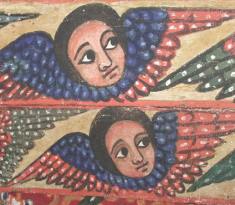
For example, Ethiopian angels are often shown with head and wings in an open configuration -
Image result for angel head wings ethiopia
but those on a censer  looked to be hugging a secret to themselves -
But were any similar images, wings folded plus head, to be found on the internet? (no)

My favourite object - too quickly drawn - was the group of protective female ancestor spirits from western Siberia, made by Teleut (a turkic people of the Altai) and kept in wooden containers as guardians. "Older women who have survived childbirth are considered wise and can help the young" says the label. 
The coarse cotton has turned brown, the flimsy red cotton of the "dresses" had faded and was stained with the food these "grandmothers" have been given [they need to be taken care of and fed regularly to be worthy of the spirits' benevolence], and some patching was necessary, long ago (early 20th century). 

They are very simple objects, just stuffed tubes and a couple of black beads for the eyes. Was it the group of three (cf. three graces...) that made them so resonant?

Also from Siberia, but in the east, is the "healing spirit doll's house" - "These dolls set up in a wooden-box home are made by Ulchis people of eastern Siberia. They are placed in the houses of seriously ill people to help them recover." 
It's a shallow wooden box, doors held on with string hinges ... inside are "flagpoles" and two dressed wooden figures with big blue eyes. At the top of the house, the flagpoles extend to finials at the top of the box. The figures, undressed, would look rather like these (with more attention to the eyes!), which are made by the Nanai, who together with the Ulchis call themselves the Nanay, "the people of this land" -
The largest Tungusic-speaking people of the Russian Far East are the Goldi (Nanai). They live along the lower Amur river valley. The Goldi show a mixture of Tungusic (Ewenki), aboriginal Nivkh, as well as Chinese-Manchu elements in their culture and language. They support themselves largely by fishing and hunting and are very skilled at building sleds and plank boats.  The male and female charms pictured here represent deities who protect hunting.
(via)

From Japan, the "fox on a box" - "The fox is a spirit messenger for Inari, the important Shinto deity for rice, harvests, trade and prosperity. This porcelain fox has a key for a rice store on its chest. The stopper on its head represents a wish-fulfilling jewel. The fox spirit delivers paper prayers, placed inside, to Inari."
photograph of carved white fox figurine
Not the one in the exhibition, even though this site suggests it is
The geometry of Ethiopian processional crosses, with their intricate latticework, has always fascinated me - one day I'll use it in a design... 
Image result for ethiopian processional cross british museum
(this and more here)

Another useful bit of symbolism, on a Chinese flower pot, are the lotus flowers in cloud form, which communicate "may your wish be granted". An image of a similar flower seems impossible to find.

From Japan's Ainu people, whispering sticks, inau - of which there are several kinds. I was fascinated by how the long thin strips of curling wood have been shaved from the body of the stick.

Interestingly, a whispering stick appears among the carved figures in this still from the Nanay video -
Image result for ulchis siberia

03 March 2018

Contemporary ceramics

Near the British Museum is the Contemporary Ceramics shop. I love to go in and see the latest wonderful things, and am not always able to resist the temptation to take something home... (not this time though).

Black and white and a bit of red - porcelain by Katharina Klug -

In the gallery space, with Jo Davies and Anja Lubach (till 10 March)

More by Katharina

Lara Scobie

Mo Jupp

John Kershaw

Fiona Thompson

Mandy Cheng

Jenny Southam

01 March 2018

Poetry Thursday - Invisible Kisses by Lem Sissay

Poems are like buses: you wait and wait, and nothing comes your way, and then all of a sudden several appear at once. One for now, and the rest for later.

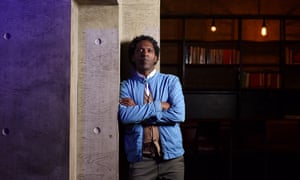
The Guardian has a new podcast called The Start, and on it Lem Sissay is talking about his background and his poem Invisible Kisses - "the 'radical' poem born of heartbreak" and often read at weddings ... a poem with a multifaceted emotional message.

"At 21, Lemn Sissay was in love with and proposed to his then-girlfriend – a fellow student and New Yorker. When the engagement was called off, the poet travelled to her family home to make sense of what had happened and soon felt the weight of his situation compounded by the realisation that he had no family to turn to."


INVISIBLE KISSES
written by Lemn Sissay
If there was ever one
Whom when you were sleeping
Would wipe your tears
When in dreams you were weeping;
Who would offer you time
When others demand;
Whose love lay more infinite
Than grains of sand.
If there was ever one
To whom you could cry;
Who would gather each tear
And blow it dry;
Who would offer help
On the mountains of time;
Who would stop to let each sunset
Soothe the jaded mind.
If there was ever one
To whom when you run
Will push back the clouds
So you are bathed in sun;
Who would open arms
If you would fall;
Who would show you everything
If you lost it all.
If there was ever one
Who when you achieve
Was there before the dream
And even then believed;
Who would clear the air
When it’s full of loss;
Who would count love
Before the cost.
If there was ever one
Who when you are cold
Will summon warm air
For your hands to hold;
Who would make peace
In pouring pain,
Make laughter fall
In falling rain.
If there was ever one
Who can offer you this and more;
Who in keyless rooms
Can open doors;
Who in open doors
Can see open fields
And in open fields
See harvests yield.
Then see only my face
In reflection of these tides
Through the clear water
Beyond the river side.
All I can send is love
In all that this is
A poem and a necklace
Of invisible kisses.
(via)

Lemn Sissay, author and broadcaster